01
Discovery
Inside the dyslexic reading brain.
We sat with Hillary, talked to reading specialists, and got feedback from students. We read research on the issues and educated ourselves on dyslexia
Curved text,
tracked, comprehended, enjoyed.
On every page, in every app.
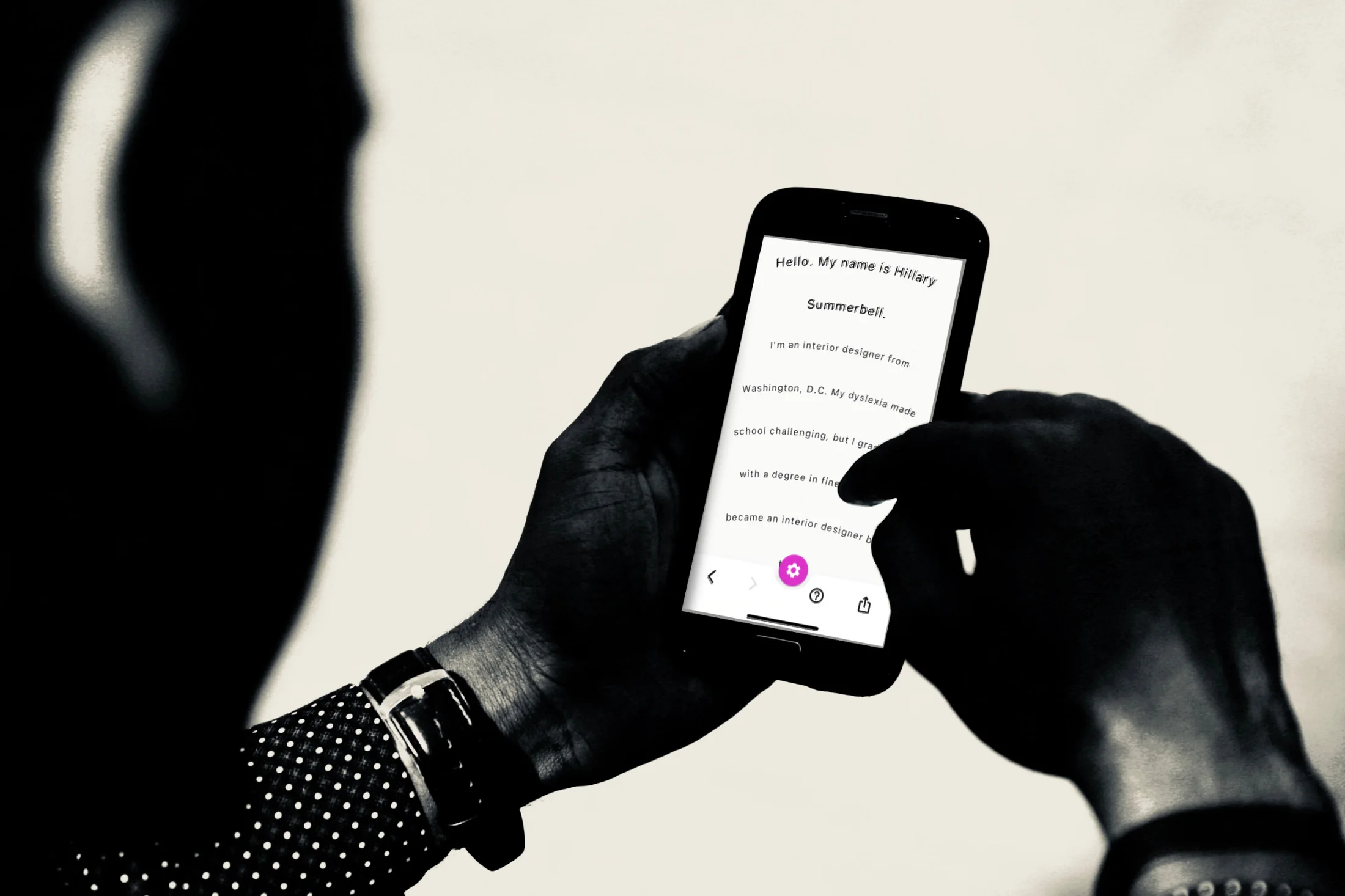
A line of text is a tightrope. An arc is a path.
Hillary Summerbell is a designer who grew up reading the long way around. Visual dyslexia made every line of text feel like a tightrope. Years later she noticed something: when she curved text into a gentle arc on a sketchpad, the words clicked.
She patented the method. She partnered with reading specialists. Then she came to Blinq with the simple question: how do we put this in front of every dyslexic student, parent, and adult who needs it, on the devices they already own?
A Chrome extension that pulls the important text out of any webpage and curves it on the spot. An iOS app and an Android app with Reader, Writer, and Word Helper. One shared arc engine underneath them all.
Then we helped Hillary partner with the Center for Research and Reform in Education at Johns Hopkins for an independent classroom study that turned the method into evidence.
We sat with Hillary, talked to reading specialists, and got feedback from students. We read research on the issues and educated ourselves on dyslexia
A shared typesetting engine that takes any plain text, breaks it on natural pause points, and lays it down on a positional reading arc. Identical math on iOS, Android, and the web.
A Chrome extension that curves any webpage in place. iOS and Android apps that operate as browsers. Built so a dyslexic 10-year-old can use them without reading the manual.
There was an independent evaluation by the Center for Research and Reform in Education. Real classrooms, real teachers, real students with dyslexia. Real fluency gains on the page.
Plain text laid down on a gentle arc. Eyes track the curve instead of fighting it. Comprehension catches up. Hillary’s sketchpad insight, made into a patented, deterministic typesetting method that any device can render.
A patented typesetting method for arcing linear text. The only one of its kind for reading accessibility.
The brain remembers the shape of a sentence, not the line it was forced to walk along. The brain remembers the shape of a sentence, not the line it was forced.
Linear text. Words sit on a tightrope. The eye loses its place at every line break.
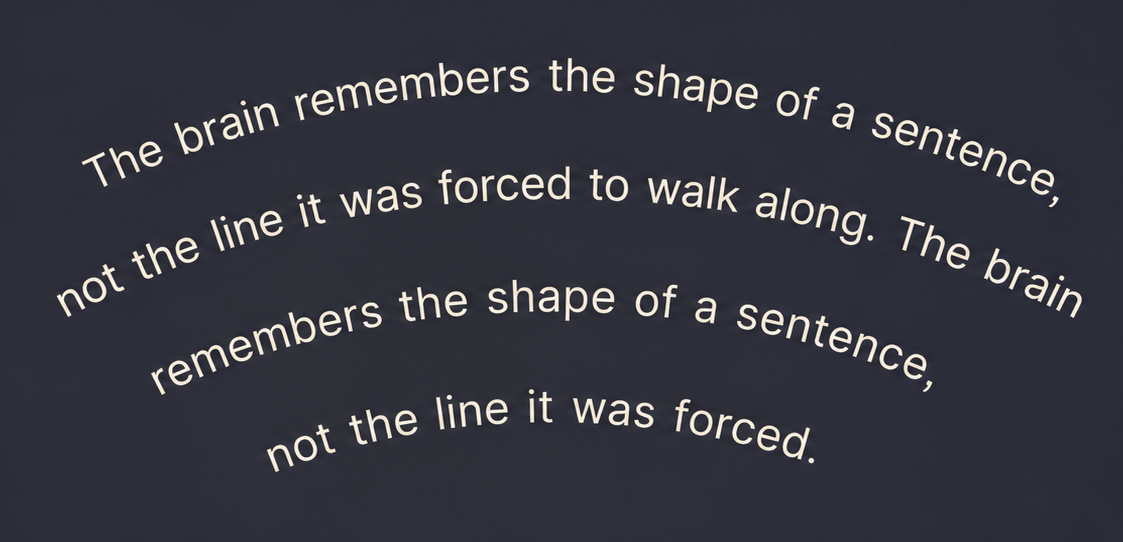
Same words, on a positional arc. The eye follows the curve, the brain catches the shape, comprehension follows.
Summerbell reshapes text to improve tracking, pacing, and reading flow for visual learners.
Each sentence follows a consistent visual structure, reducing uncertainty and cognitive friction.
The original words stay intact. Summerbell changes presentation, not meaning.
A Chrome extension that quietly extracts the readable text from any webpage. News, recipes, school assignments, Wikipedia and lays it back down on the Summerbell arc, right inside the tab. Two clicks, no copy-paste.
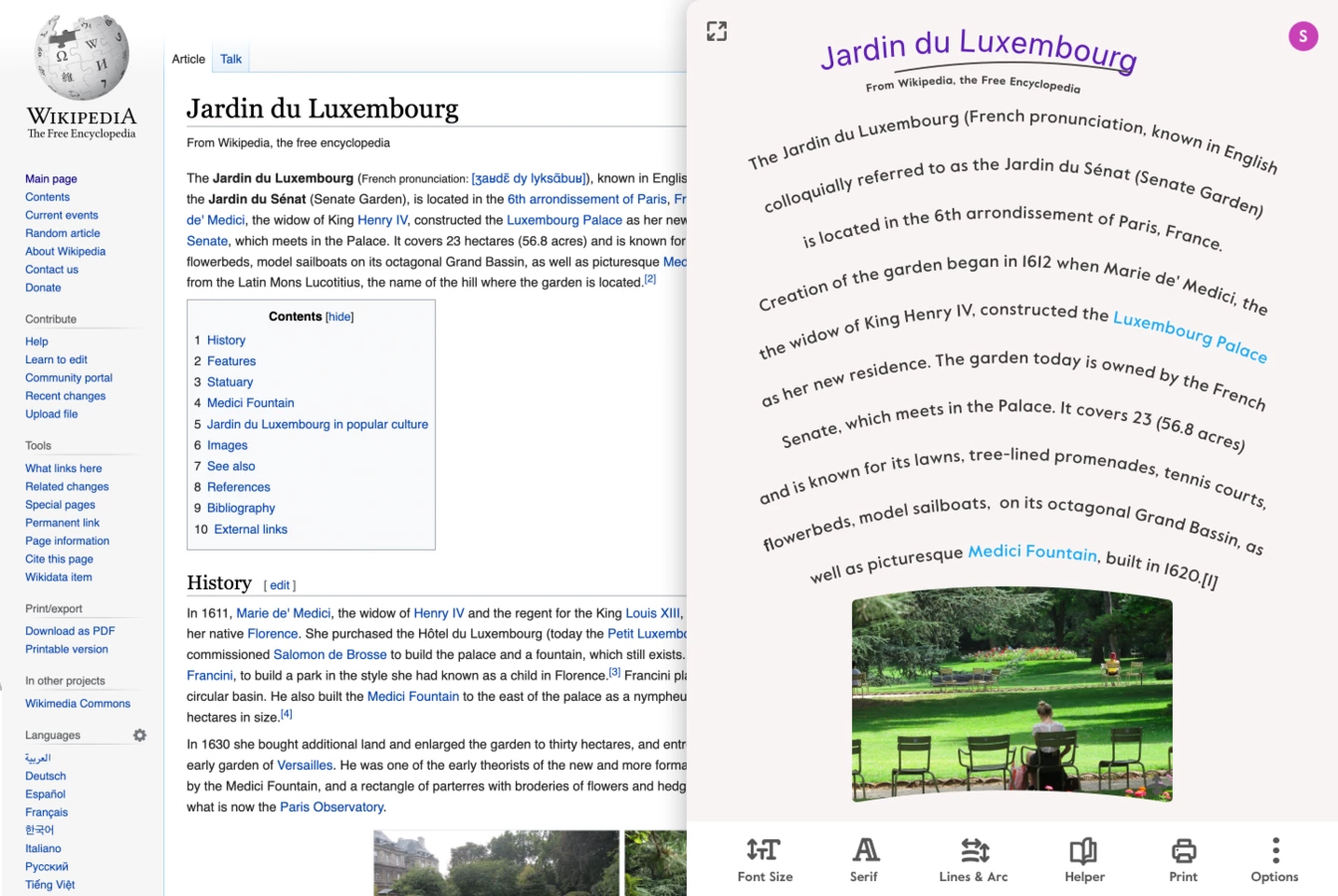
Strips ads, sidebars, and clutter the way a reader-mode does, keeps just the article body, headings, and lists.
Hands the text to the shared arc engine. Same typesetting math as the iOS and Android apps, rendered in the tab.
A per-site setting that turns Summerbell on automatically next visit. Students never have to ask for the version they can read.
Reading Arc. Word Helper. Guided Support.
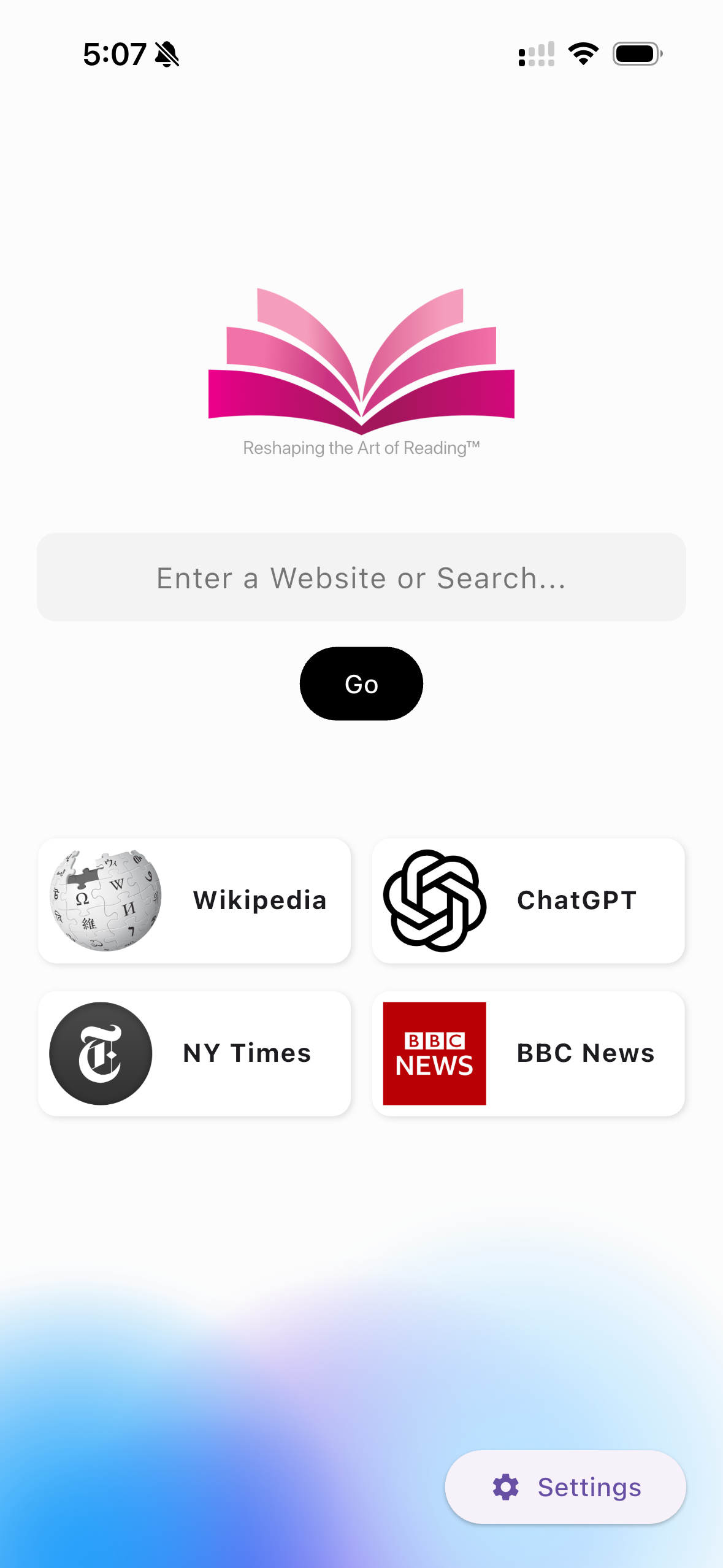
A native iOS and Android suite that puts the entire Summerbell method in the pocket of every student. Summerbell transforms traditional text into a visual reading experience built for comprehension. Readers can reshape books and web content into the Summerbell arc, decode unfamiliar words instantly, and build confidence reading independently.
“Reading, in any moment of the day.”
Turn books, articles, and websites into Summerbell’s patented visual reading format.
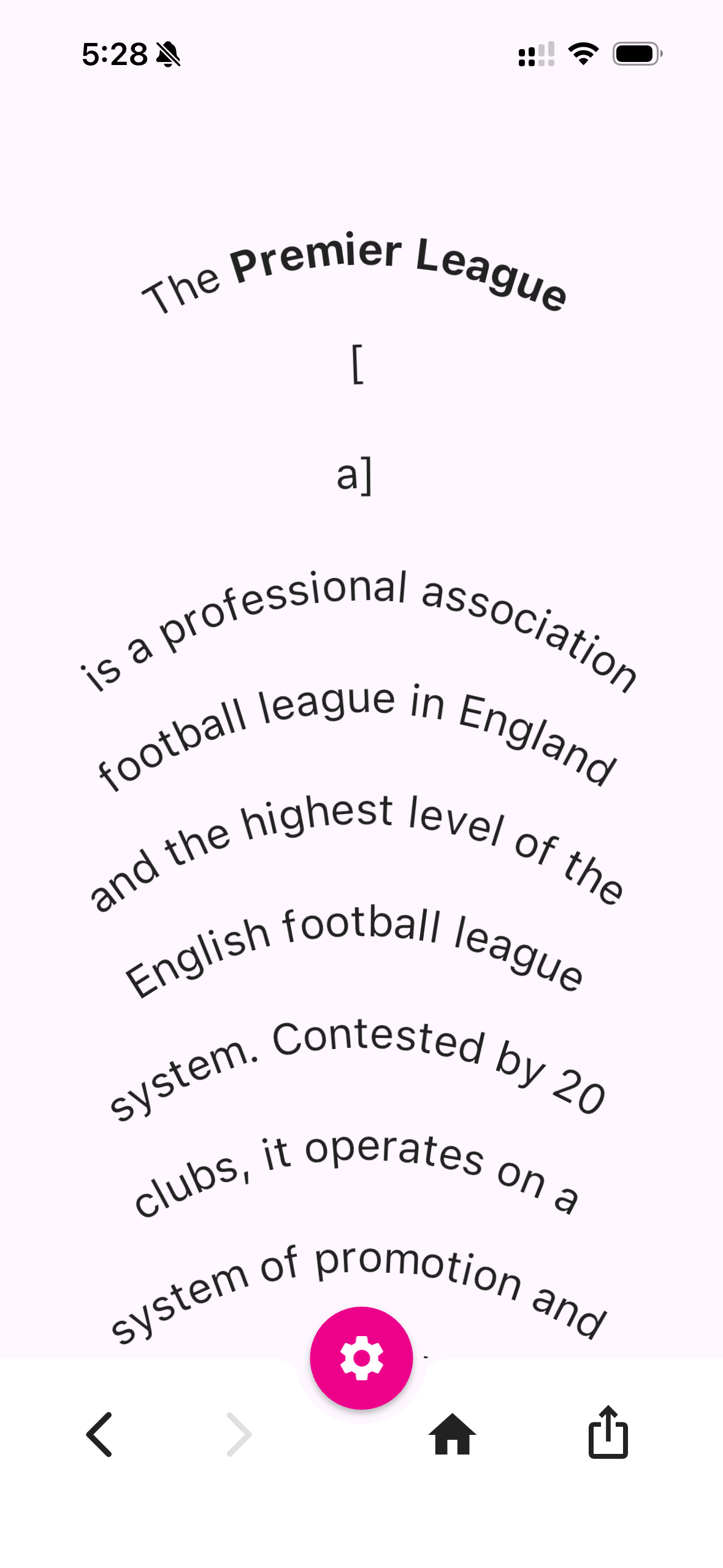
Visit your favorite websites and chat with AI in the Summerbell reading format.
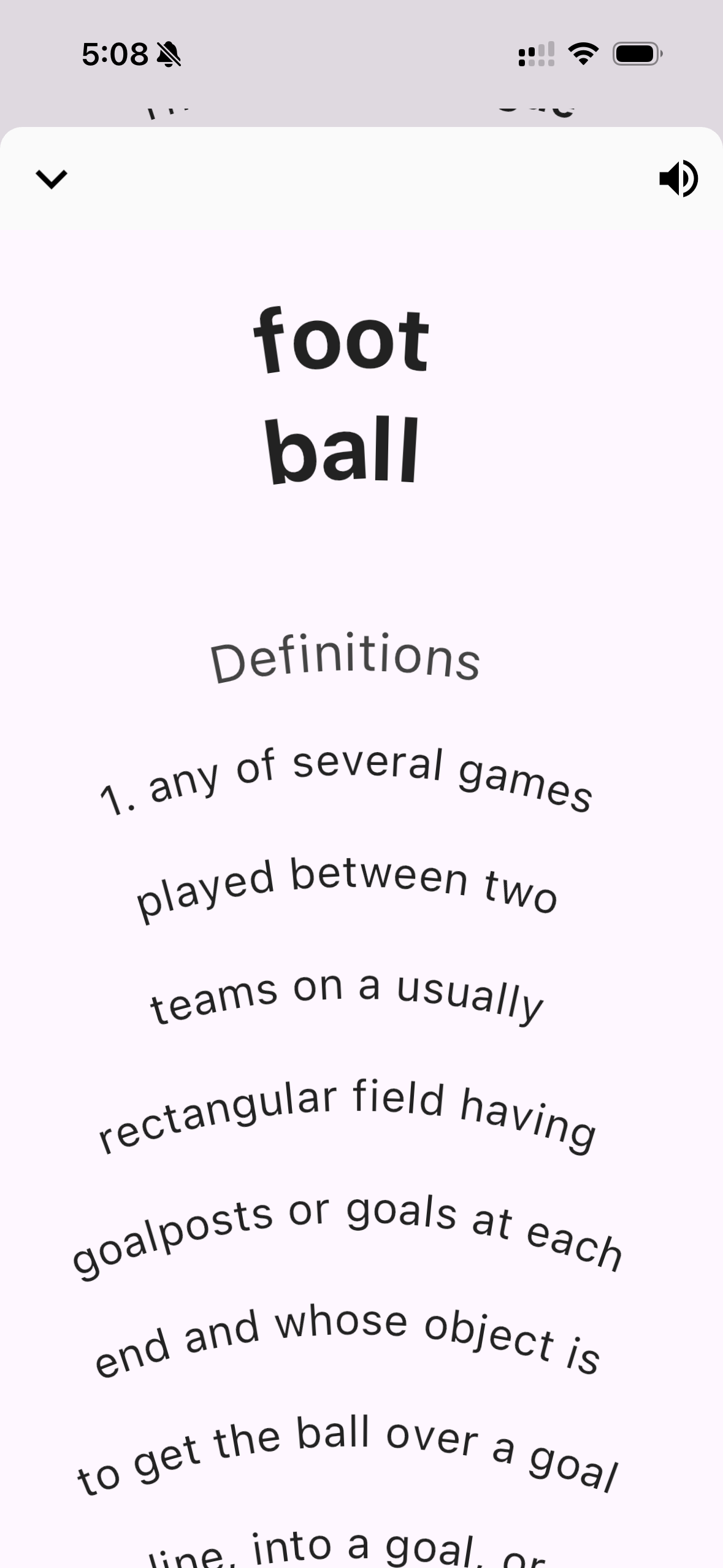
Tap difficult words to hear pronunciation, see definitions, and break them down instantly.
A single arc engine drives everything Summerbell ships. The same typesetting kernel runs on iOS, Android, and the web. Independent classroom research keeps the method honest.
Three native surfaces that look, feel, and behave like the platform they live on. One shared design system.
Takes raw text in, breaks it on cadence, places each phrase on a deterministic curve. The patented heart of every Summerbell surface.
Pronunciation, syllable breaks, child-grade definitions, and synonym pills, tuned for early and struggling readers, not adults.
The Center for Research and Reform in Education at Johns Hopkins evaluated the Summerbell program with real teachers and real dyslexic students.
East Stroudsburg Area School District, Pennsylvania. Independent evaluation by the Center for Research and Reform in Education, Johns Hopkins University.
Greater
Students with dyslexia using Summerbell demonstrated greater reading fluency gains in spring 2024 compared to other elementary students with dyslexia in the district, in an exploratory CRRE analysis.
Noticeable
Teachers reported the program had a noticeable positive impact on reading fluency for most students, with specific examples highlighted in classroom observation interviews.
Most students reported the positional reading arc improved both the ease and speed of their reading.
Students navigated the application with little difficulty across grade levels and devices, per CRRE classroom observation.
Published by the Center for Research and Reform in Education, Johns Hopkins University. Full report available from Summerbell.
Download reportIt feels like I’m putting on glasses
and seeing clearly.
Much more clearly.
A composite gold and silver investment platform we built with Kian Smith and Sanu. Custody architecture, consumer Flutter app, and a payments layer that settles in seconds.